

Strawberry Moon 2025: How to see it in UAE?
Last full Moon of spring with historic lunar standstill
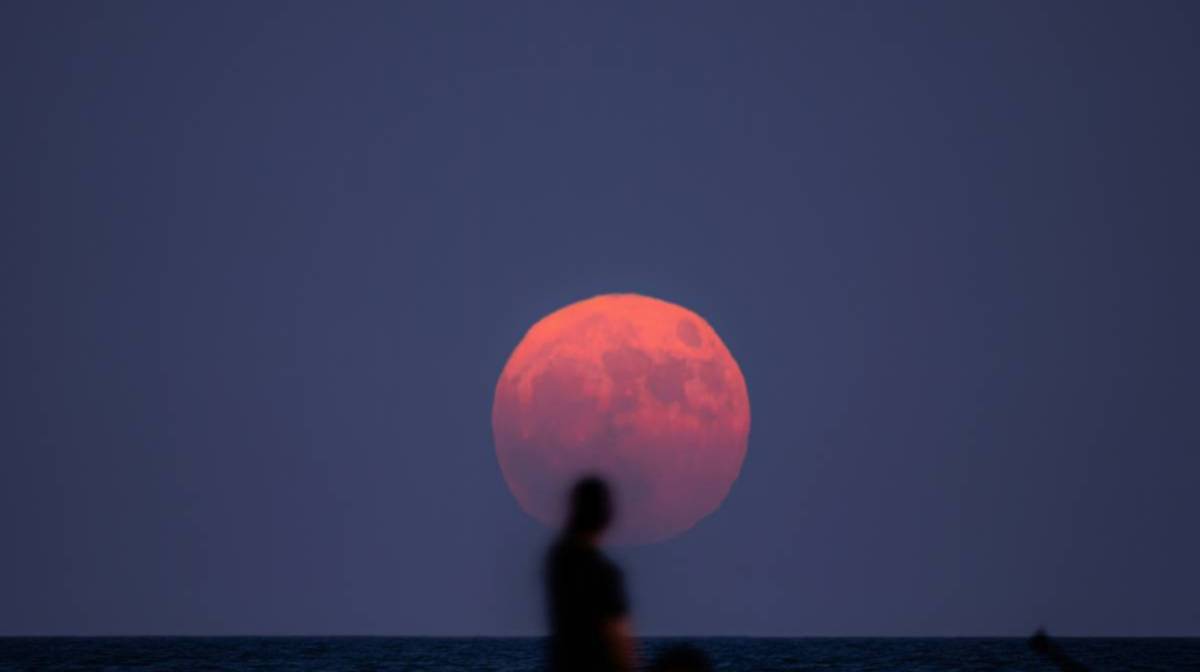
DUBAI: UAE residents can look up tonight, June 11, to witness the Strawberry Moon, a rare full Moon event not expected to appear this low in the sky again until 2043.
As part of a major lunar cycle, this is the lowest Full Moon visible in the Northern Hemisphere in 18.6 years.
Moonrise is expected at 7.32pm and moonset will occur at 5.55am on June 12. According to the Dubai Astronomy Group (DAG), the celestial event will be visible across the country and requires no special equipment to view.
This year’s Strawberry Moon coincides with the Great Lunar Standstill, giving it additional astronomical significance. If skies are clear, viewers can simply look toward the eastern horizon shortly after sunset to catch the golden or orange glow of the Moon as it rises.
What is a Strawberry Moon?
Despite the name, the Moon won’t appear pink or red. The term “Strawberry Moon” comes from Native American tribes, particularly the Algonquin, who associated this June full Moon with the start of strawberry-picking season in North America. It is the sixth full Moon of the year and marks the last full Moon of spring.
Other traditional names for the June full Moon include the Blooming Moon, Birth Moon, and Green Corn Moon, depending on regional and cultural traditions. Scientifically, the Moon appears full when Earth lies directly between the Sun and the Moon.
When and where to watch?
According to DAG, the best time to see the Strawberry Moon is right after moonrise at 7.32pm. While it will remain visible through the night, it is most striking when it is low on the horizon, especially during moonrise and moonset.
The Moon will be visible from almost anywhere in the UAE, but clearer and more dramatic views are expected from open locations like deserts, beaches, and high rooftops. Urban viewers can still enjoy it if they have an unobstructed view of the eastern sky.
While the Moon is visible with the naked eye, using binoculars or telescopes can enhance its appearance, bringing out surface details and deepening the colour seen at the horizon.
What makes it rare?
Tonight’s Strawberry Moon coincides with a major lunar standstill, a phenomenon caused by the combined tilt of the Moon’s orbit (5.1°) and the Earth’s axis (23.4°). This alignment happens only once every 18.6 years, causing the Moon to rise and set at the most extreme points on the horizon.
In the Northern Hemisphere, this creates the lowest Full Moon in the cycle, meaning it appears unusually close to the horizon throughout the night. In contrast, viewers in the Southern Hemisphere will see the highest Full Moon of the same cycle.
The lunar standstill is not a one-night event. It spans from early 2025 to mid-2026, with this particular full Moon representing the peak of the phenomenon. It last occurred in 2006, and the next will not be seen until 2043.
What constellations is it passing?
From June 9 to 12, the Moon will move across three constellations: Scorpius, Ophiuchus, and Sagittarius. These constellations sit low in the sky when viewed from the Northern Hemisphere, underlining the Moon’s rare position near the horizon.
Sagittarius is known for the Teapot asterism, a cluster of stars that forms a teapot shape. The Strawberry Moon will pass through this familiar zone, giving amateur astronomers a rich background for observation.
Why does it look bigger?
One reason the Strawberry Moon appears particularly dramatic is due to the Moon illusion. This optical effect causes the Moon to look larger when it is near the horizon. It isn’t physically bigger – but atmospheric context and visual cues make it seem so.
Additionally, due to atmospheric scattering, the Moon often looks yellow, orange, or red when low in the sky. As moonlight travels through more of Earth's atmosphere, shorter blue wavelengths scatter out and longer red wavelengths dominate the view.
What if I miss it?
While other full Moons will appear throughout the year – including July’s Buck Moon and September’s Harvest Moon – none will combine the seasonal, orbital, and visual features seen in tonight’s Strawberry Moon.
There is only one Strawberry Moon in 2025, and the next one this low on the horizon won't appear until 2043, making tonight’s sighting particularly significant for skywatchers across the UAE.